Industrial Direct Thermal Media: Seiko Mobile Receipt Rolls

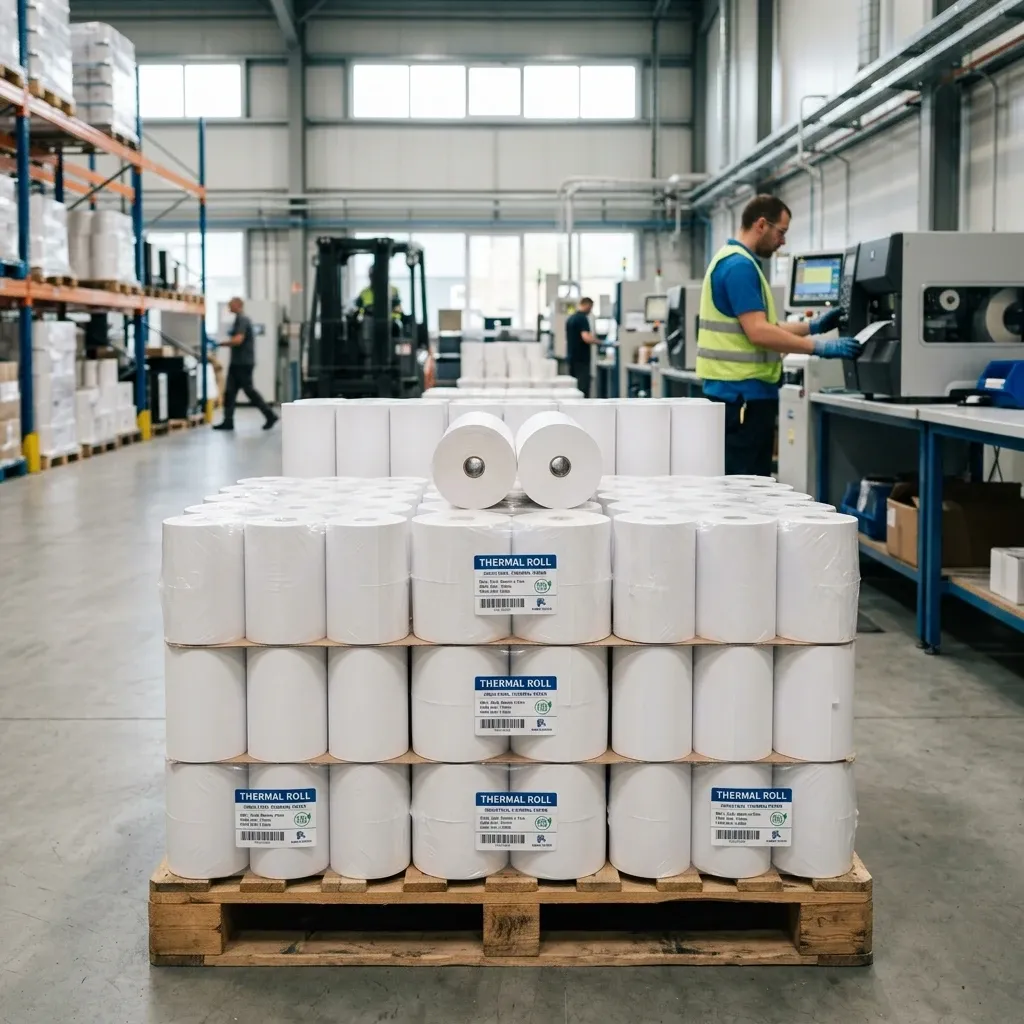
Industrial Direct Thermal Media: Material Science of Seiko Mobile Receipt Rolls in Harsh Workshop Environments
Analyzing leuco dye reaction kinetics, topcoat barrier chemistry, and abrasive printhead wear across industrial shop floors.
Chemical Architecture & Substrate Thermodynamics
Direct thermal printing eliminates liquid inks and ribbons by embedding chemical reactants directly within the paper substrate. High-grade media such as Seiko mobile receipt rolls rely on a multi-layer composite: a purified bleached cellulose base, a calcined clay thermal insulation undercoat, an active thermosensitive dye layer, and an optional cross-linked polyvinyl alcohol (PVA) topcoat. The active layer contains a colorless leuco dye precursor (typically fluoran derivatives) physically separated from an acidic developer (phenolic or non-phenolic sulfonylurea matrices) by an engineered sensitizer wax. When the printhead injects localized thermal energy above 75°C, the sensitizer melts, dissolving both dye and developer into an instantaneous charge-transfer complex that yields a deep black image. Use our Cost Calculator to balance consumable media expenditure against printhead replacement intervals across multi-unit shop deployments.
Direct Thermal vs. Thermal Transfer in Industrial Traceability
Field technicians and automation engineers frequently default to thermal transfer (TTR) printing under the assumption that direct thermal paper cannot survive workshop environments. In high-throughput industrial operations—such as batch traceability tagging, CNC tool preset labeling, mobile maintenance logging, and field inspection reporting—thermal transfer systems introduce mechanical complexity. Ribbons can crease, tear under dirty environments, or stall take-up spindles when exposed to ambient oil mist and metal fines.
Mobile direct thermal units eliminate ribbon mechanics entirely, reducing moving parts to a single stepper motor, a platen roller, and a ceramic thick-film thermal printhead (TPH). However, standard point-of-sale (POS) receipt paper quickly turns black or fades into illegibility when exposed to machine shop realities: cutting oils, brake cleaner, UV sunlight, and plasticizers leaching from PVC clipboards. Utilizing engineered mobile media like Seiko-specified receipt rolls shifts the failure threshold significantly. The key engineering distinction lies in substrate chemistry and protective barrier application.
- Active Layer Melting Transition: Formulated with eutectic sensitizers (such as 1,2-diphenoxyethane) engineered to melt sharply between 78°C and 85°C, preventing background fogging in unconditioned industrial cabinets up to 55°C.
- Undercoat Thermal Efficiency: Micro-porous calcined clay or hollow silica spheres insulate the active chemistry from the raw base paper, reflecting 92% of the thermal pulse upward into the chromogenic layer.
- Printhead Abrasiveness Rating: Controlled mineral filler formulation ensures low abrasivity against the protective silicon dioxide (SiO2) and diamond-like carbon (DLC) printhead glazes.
- Static Dissipative Backcoat: Prevents electrostatic discharge (ESD) buildup during rapid unrolling in low-humidity winter warehouse environments, protecting sensitive driver electronics.
Substrate Microstructure and Coating Stratification
A cross-sectional microscopic analysis of industrial-grade mobile receipt paper reveals four distinct functional strata. Understanding this stratification explains why budget receipt rolls cause premature hardware failure while certified industrial rolls maintain reliable service lives.
The core substrate consists of high-tensile bleached chemical wood pulp, calendered under extreme roller pressure to achieve uniform caliper (thickness) of 55 to 65 micrometers. Tensile strength along the machine direction (MD) must withstand the abrupt torque spikes exerted by miniature planetary gear motors during high-speed indexing.
Directly atop the raw cellulose fibers sits the base coat (pre-coat). Cellulose is an efficient thermal sink; if leuco dye is coated directly onto raw pulp, heat from the thermal printhead bleeds deep into the paper sheet, demanding higher electrical drive current and causing thermal blur. The pre-coat forms a microscopic thermal barrier containing engineered voids that trap microscopic air pockets, acting as an insulating barrier that redirects thermal energy directly into the chemical color-forming zone.
Above the insulating pre-coat lies the thermosensitive emulsion. In premium formulations, the leuco dye and developer particles are micronized to an average particle diameter below 1.5 micrometers. Finer particle dispersion ensures lower required activation energy, enabling crisp barcode definition even at travel speeds exceeding 120 mm per second. Finally, an acrylic or PVA polymer topcoat seals the active components against moisture, organic grease, and volatile industrial solvents.
Field Physics & Calculation: Thermal Printhead Energy Dissipation
Thermal printing relies on transient Joule heating. Each dot on a thermal printhead consists of a microscopic tantalum-aluminum or ruthenium oxide resistor element deposited onto a ceramic substrate. To trigger the leuco dye transformation without degrading the paper or blistering the printhead glaze, energy delivery must be precisely calibrated.
Consider a mobile 203 DPI (dots per inch) Seiko thermal mechanism running a 58 mm receipt roll at a feed rate of 100 mm/s. The thermal line pitch is 0.125 mm (125 micrometers). The nominal resistance of an individual heating element is R = 650 Ohms. The battery-backed supply voltage under load is V = 7.4 Volts.
The total electrical energy dissipated per dot element during an energized pulse is expressed by Joule's Law:
Edot = (V2 / R) × tpulse
Where:
- V = 7.4 Volts (operating supply voltage)
- R = 650 Ohms (resistor element resistance)
- tpulse = Duration of the electrical pulse (seconds)
At 100 mm/s, the line cycle time is:
Tline = (Line Pitch) / (Print Speed) = 0.125 mm / 100 mm/s = 0.00125 seconds = 1.25 milliseconds (1250 μs).
The energizing duty cycle must leave sufficient cooling time for the resistor glaze to drop below the dye deactivation threshold (60°C) before the next dot line advances; otherwise, continuous trailing ghost lines appear. The active pulse width is configured to tpulse = 420 microseconds (0.42 ms):
Pinst = (7.4)2 / 650 = 54.76 / 650 = 0.0842 Watts (84.2 mW per dot element).
Edot = 0.0842 W × 0.00042 s = 3.538 × 10⁻⁵ Joules = 35.38 microjoules (μJ).
The surface area of an individual 203 DPI resistor element is approximately Adot = 0.100 mm × 0.100 mm = 0.010 mm2 (1.0 × 10⁻⁴ cm2).
The energy density delivered to the paper coating is:
Energy Density = Edot / Adot = 35.38 μJ / 0.010 mm2 = 3.538 mJ/mm2 (0.354 J/cm2).
If budget thermal paper containing high concentrations of calcium carbonate filler is substituted, its higher thermal conductivity requires elevating the pulse width to 680 μs (57.2 μJ per dot, or 5.72 mJ/mm2) to achieve acceptable optical density. This 62% increase in thermal stress accelerates thermal cycle fatigue on the resistor passivation layer, leading to open-circuit pixel failure and white streaks across barcodes.
Material Degradation Mechanisms on the Shop Floor
Standard retail receipt rolls degrade rapidly when subjected to common industrial chemicals. In machine shops and manufacturing cells, three primary chemical pathways degrade thermal records:
1. Plasticizer Migration: Flexible PVC sleeves, synthetic rubber hoses, and soft vinyl storage binders contain phthalate or trimellitate plasticizers. When direct thermal paper contacts flexible PVC, the low-molecular-weight plasticizer molecules migrate into the paper coating. The plasticizer acts as an organic solvent, dissolving the leuco dye-developer complex and causing the printed characters to fade into complete invisibility within 48 to 72 hours.
2. Hydrocarbon and Solvent Attack: Mineral spirits, acetone, ethyl alcohol, and synthetic metalworking coolants penetrate unprotected paper pores. Solvents dissolve the sensitizer wax at ambient temperatures, allowing the dye and developer to react prematurely without heat, causing the entire label to turn solid black (background fogging).
3. UV and Photo-Oxidative Fading: Intense sunlight or high-bay UV discharge lighting breaks the chromophore bonds in fluoran dyes. Unstabilized prints exposed on outdoor storage racks typically suffer complete contrast loss within 30 days. Industrial-grade formulations incorporate hindered amine light stabilizers (HALS) that scavenge free radicals and extend legibility beyond five years.
Material Comparison: Industrial Mobile Media vs. Alternative Substrates
Selecting the appropriate roll substrate requires evaluating environmental exposure against cost and printhead wear. The matrix below benchmarks industrial mobile receipt paper against competing shop-floor media:
| Substrate Type | Base Material | Heat Resistance Threshold | Solvent / Oil Resistance | Abrasion Index (Printhead Wear) | Estimated Image Life |
|---|---|---|---|---|---|
| Standard POS Thermal Roll | Uncoated Wood Pulp | 48°C | Poor (Fails instantly) | High (Unrefined fillers) | 6 - 12 Months |
| Top-Coated Industrial Paper (Seiko OEM) | High-Density Calendered Kraft | 65°C | Good (Oils, Splash-proof) | Very Low (< 0.12 mg/km) | 5 - 10 Years |
| Synthetic Thermal Film (BOPP) | Biaxially Oriented Polypropylene | 80°C | Excellent (Water & Petrochemicals) | Low | 10 - 20 Years |
| Thermal Transfer Matte Paper | Standard Kraft + Wax Ribbon | 70°C | Moderate (Smudges under solvents) | Moderate (Ribbon friction) | 10+ Years |
| Thermal Transfer Polyester (PET) | Engineered PET + Resin Ribbon | 150°C | Exceptional (Industrial Solvents) | Low (Lubricated backcoat) | 20+ Years |
Mechanical Interface: Platen Rollers, Paper Dust, and Printhead Life
In mobile printers, print quality is directly coupled to platen roller durometer and paper slit quality. Budget receipt rolls are slit using dull, mechanical shear knives, producing loose paper dust and fiber lint along the roll edges. When the roll feeds through the mechanism, this cellulose and mineral debris settles onto the rubber platen roller and builds up along the ceramic printhead glaze.
As paper dust accumulates behind the burn line, it acts as a thermal insulator, preventing proper contact between the heating elements and the paper coating. Operators frequently respond by turning up print darkness in software, unaware that they are over-driving the resistors. Furthermore, hard calcium carbonate particles trapped between the platen and printhead generate micro-grooves across the protective DLC coating. Once the DLC layer is breached, moisture and atmospheric sulfur attack the underlying resistor metallization, causing permanent hardware failure.
- Platen Roller Durometer: Shore A hardness of 40 to 45 durometer provides optimal compliant backing, compensating for minute paper thickness variations while maintaining uniform contact pressure across the 58 mm line.
- Clean Slitting Standards: Laser or precision rotary-slung edges reduce airborne paper fines by 94% compared to budget conversion processes.
- Platen Cleaning Interval: Clean platen rubber every 5 rolls using a lint-free swab saturated with 99% isopropyl alcohol; never use acetone or shop degreasers that embrittle nitrile rubber.
- Core Tolerances: Precision-wound cores (12 mm ID) eliminate roll eccentricity that causes cyclical feed binding and irregular line spacing during rapid dispensing.
Workshop Maintenance and Service Life Protocol
To maximize mobile printer reliability in demanding industrial environments, implement the following four-step maintenance procedure during regular tool-crib turn-in cycles:
- Debris Inspection & Extraction: Open the clam-shell cover. Use low-pressure compressed air (under 30 PSI) to blow paper lint out of the optocoupler paper-end sensor and gear train. Never use high-pressure air lines that blow abrasive shop grit directly into the motor bearings.
- Thermal Head Stripping: Inspect the resistor array using a 10x inspection loupe. Remove baked-on resin deposits using an approved thermal printhead cleaning pen or a swab moistened with anhydrous isopropyl alcohol. Swipe gently across the line; never scrub with metal tools, razor blades, or abrasive pads.
- Platen Roller Rejuvenation: Rotate the platen roller manually while wiping its surface with an alcohol-moistened swab. Inspect the rubber for flat spots or oil swelling caused by petroleum solvent contamination. A glazed or hardened roller must be replaced to restore proper friction traction.
- Tear-Bar & Cutter Calibration: Clean adhesive residues from the serrated tear bar. Dull or adhesive-clogged tear bars exert excessive tensile shock on the paper feed gears during manual tearing, causing stripped plastic gear teeth over time.
Frequently Asked Questions
Why do my printed thermal labels turn solid black when exposed to workshop degreasers?
Solvents dissolve the sensitizer wax in the active layer, enabling the leuco dye and chemical developer to combine at room temperature without requiring heat from the printhead.
Can top-coated mobile receipt paper survive direct contact with machine cutting fluids?
High-grade top-coated paper resists intermittent splashes of mineral and synthetic cutting fluids, but prolonged submersion will eventually break down cellulose fibers unless synthetic polypropylene media is used.
What causes thin, persistent white horizontal lines across printed barcodes on mobile printers?
White lines indicate burned-out resistor elements on the ceramic printhead, typically caused by electrostatic discharge, physical scratching from debris, or localized thermal burnout from running excessive darkness settings.
How does paper core diameter impact mobile printer motor longevity?
Rolls wound on undersized or out-of-round cores bind inside the media bay as the roll depletes, increasing motor current draw by up to 40% and accelerating planetary gear tooth wear.
Workshop Safety and Storage Protocol
Store direct thermal paper rolls in a cool, dark environment below 25°C and under 60% relative humidity. Never store rolls inside service truck cabs or metal shop lockers exposed to direct summer solar gain, as temperatures above 50°C initiate premature background darkening. When logging calibration readings for legal certification or high-liability mechanical repairs, always scan and archive a digital backup; direct thermal media is an active chemical substrate and should not be relied upon as an unmonitored permanent archival medium beyond ten years.