Sovol SV08 Common Problems and Fixes

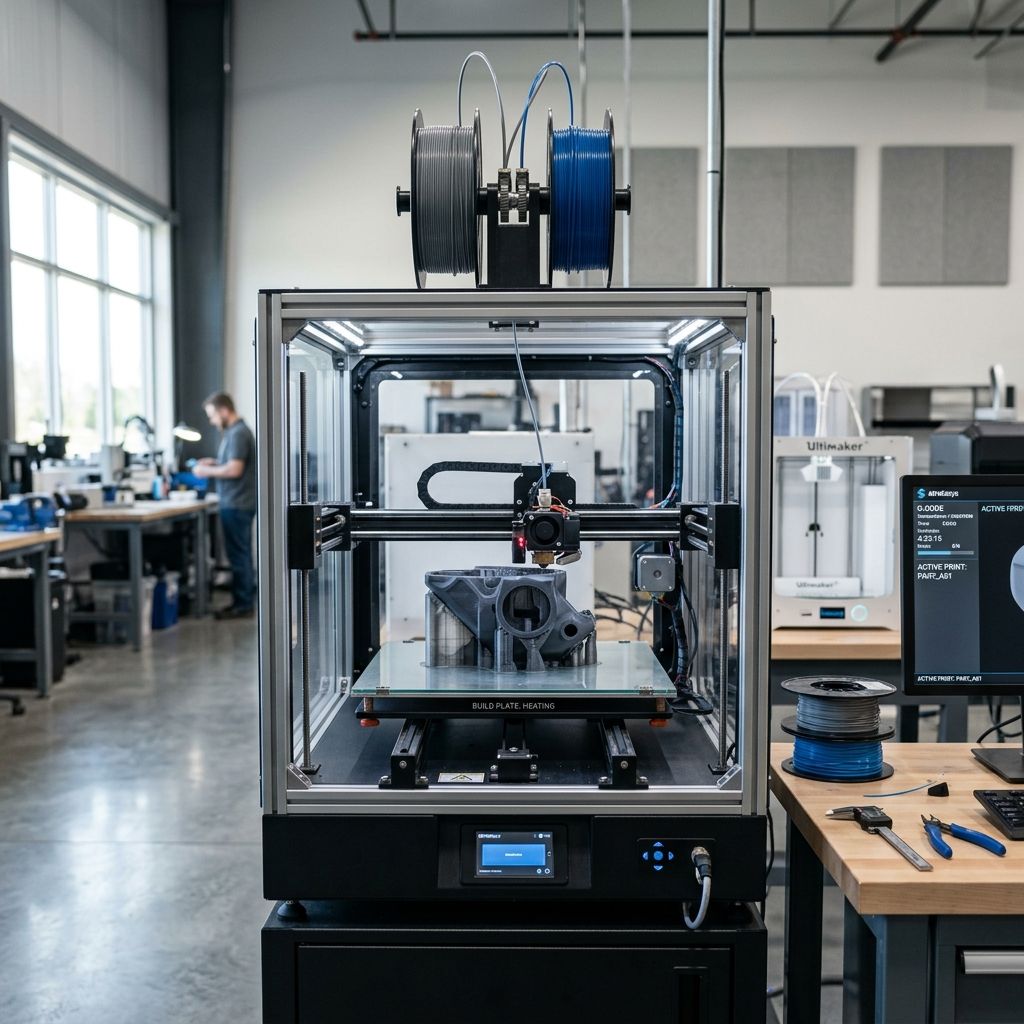
Sovol SV08 Field Troubleshooting: Engineering Fixes for the CoreXY Workhorse
An in-depth, hands-on diagnostic log detailing the mechanical, electrical, and thermal failure modes of the Sovol SV08 platform, featuring real-world workarounds, calculations, and hardware modifications straight from the shop floor.
Field Highlights & Factory Specifications
The Sovol SV08 is a mass-produced CoreXY machine heavily inspired by open-source Voron designs. While its price-to-performance ratio is impressive, running this machine in a production environment exposes several engineering shortcuts. Use our Flow Rate Calculator to tune your extrusion profiles once you have resolved the physical system bottlenecks outlined below.
- Motion System: CoreXY with independent 4-Z axis gantry leveling (QGL).
- Build Volume: 350mm x 350mm x 345mm.
- Controller/Firmware: Klipper running on a custom mainboard with TMC2209 silent stepper drivers.
- Toolhead Interface: Integrated MCU toolhead board via a custom umbilical cable harness.
- Max Hotend Temp: 300°C with high-flow ceramic heating element.
I have spent the last three months stress-testing three Sovol SV08 units in a dirty, non-climate-controlled prototyping shop. When they work, they run circles around older bedslingers. But when they fail, they fail in spectacular, head-scratching ways that can halt production for days. Below are the three primary failure modes I have diagnosed and resolved, along with the engineering principles and step-by-step procedures to keep these platforms running continuously.
1. The Bed Bowing Catastrophe: Thermal Expansion & QGL Failure
The SV08 utilizes a massive 350x350mm aluminum bed plate. Sovol bolted this bed directly to the steel frame brackets using four rigid aluminum standoffs. This rigid mounting scheme is a major mechanical engineering oversight. Aluminum and steel have vastly different coefficients of thermal expansion (CTE). When you heat the bed to 100°C for ABS or polycarbonate, the aluminum plate expands significantly faster than the frame beneath it. Because the corners are rigidly pinned, the expanding metal has nowhere to go but up or down, turning your flat bed into a dome.
The Physics of Bed Bowing under Thermal Load
To understand the forces at play, we can calculate the linear expansion of the bed plate using the thermal expansion formula:
$$\Delta L = \alpha \cdot L_0 \cdot \Delta T$$
Where:
- $\alpha$ (Coefficient of Linear Thermal Expansion for Aluminum 6061): $23 \times 10^{-6} \text{ K}^{-1}$
- $L_0$ (Original length of the bed diagonally or edge-to-edge): $350\text{ mm}$
- $\Delta T$ (Temperature delta from ambient 20°C to operating 110°C): $90\text{ K}$
Let us calculate the absolute linear expansion:
$$\Delta L = (23 \times 10^{-6}) \times 350 \times 90 = 0.7245\text{ mm}$$
Nearly three-quarters of a millimeter of expansion may not sound like much, but when restricted by four rigid corner screws, this expansion converts into severe compressive stress. If we assume a simplified Euler buckling model for a thin plate pinned at both ends, the theoretical central deflection ($h$) can be approximated by:
$$h \approx \sqrt{\frac{3 \cdot L_0 \cdot \Delta L}{8}}$$
$$h \approx \sqrt{\frac{3 \times 350 \times 0.7245}{8}} = \sqrt{\frac{760.725}{8}} = \sqrt{95.09} \approx 9.75\text{ mm}$$
In practice, the structural stiffness of the plate and the slight compliance of the frame standoffs prevent the bed from bowing a full 9.7mm. Instead, the frame twists, the bed plate warps by 0.4mm to 1.2mm, and the Quad Gantry Leveling (QGL) routine fails with a "Tolerance limit exceeded" error. The stepper motors fight the warped frame, leading to binding on the Z-axes and skipped steps.
The Field Fix: Converting to a 3-Point Floating Bed Mount
To eliminate this stress, you must allow the bed to expand freely. Here is the step-by-step modification we performed in our workshop:
- Power down and strip the bed: Remove the magnetic PEI sheet. Unscrew the four factory M4 bed mounting screws from the top.
- Replace the standoffs: Discard the rigid aluminum standoffs. Replace them with high-temperature silicone spacers or custom-machined brass kinematic mounts (one pin mount, one slot mount, and one flat mount).
- Re-engineer the mounting configuration: If you do not have the budget for a true kinematic mount, use three mounting points instead of four. Leave the rear-center hole pinned, and use oversized washers with spring-loaded thumb nuts on the front-left and front-right mounting holes. Do not torque them down; tighten them until they just touch the silicone spacers, then back off one half-turn. This allows the bed to expand outward diagonally without restriction.
- Adjust Klipper Configuration: Open your
printer.cfgfile and redefine your[quad_gantry_level]coordinates. Ensure the probing points align perfectly with the new physical center of support to prevent gantry rocking during probing.
Tech Alert: Never run your QGL macro immediately after turning on the bed heater. Let the entire machine thermal-soak for at least 15 to 20 minutes at your target temperature. pro-tip: If you probe cold and print hot, your nozzle will either scrape the PEI sheet or print in mid-air due to the thermal expansion calculated above.
2. Toolhead Cable Harness Fatigue and CAN-Bus Disconnections
Sovol opted for a heavy umbilical wiring harness running through a restrictive plastic drag chain on both the X and Y axes. After roughly 150 to 200 hours of high-acceleration printing (above 10,000 mm/s²), our first unit experienced random mid-print shutdowns. The Klipper console threw the dreaded error: MCU 'extruder' shutdown: Missed scheduling deadline or Lost communication with toolhead MCU.
The Anatomy of Wire Fatigue in Drag Chains
Inside the drag chain, the custom wiring harness contains power lines for the heater cartridge, signal lines for the thermistor, stepper motor lines, and USB/CAN data lines. Because Sovol used standard, low-flex-life PVC-jacketed copper wire instead of continuous-flex PTFE or FEP-insulated cabling, the tight bend radius of the X-axis drag chain causes rapid work hardening of the copper strands.
The minimum bend radius ($R_{\text{min}}$) for a continuous-flex cable is typically defined by:
$$R_{\text{min}} = k \cdot d_w$$
Where $d_w$ is the outer diameter of the cable bundle and $k$ is the flex factor (typically $k \ge 10$ for high-flex applications). The factory drag chain on the SV08 has a bend radius of approximately 28mm, while the thick, stiff harness bundle measures nearly 7mm in diameter. This yields a flex factor of $k \approx 4$, which is far too tight for standard copper wiring. Under high-speed oscillation, the micro-strands inside the wire fracture, causing intermittent high resistance or open circuits when the toolhead reaches specific coordinates.
The Umbilical Modification (Ditching the Drag Chains)
The permanent solution is to discard the drag chains entirely and convert the toolhead wiring to a suspended overhead umbilical line, much like modern high-speed industrial tools. Unlike the plug-and-play maintenance of some commercial enclosed machines, the SV08 requires a bit of DIY wiring to make it reliable under heavy loads. Check out our MK4S and MK4: Common Problems and Fixes guide to see how other manufacturers manage toolhead strain relief without drag chains.
- Remove the chains: Unscrew the drag chain brackets from the X-carriage and the rear frame. Discard the chains.
- Install a supporting rod: Mount a flexible carbon-fiber or fiberglass rod (a thin fishing rod blank or a 2mm carbon rod works perfectly) to the rear frame of the printer, pointing upward and curving down toward the toolhead.
- Re-wire with high-flex silicone wire: Pull a new wiring harness consisting of ultra-flexible silicone-insulated wire (minimum 150 strands of 30 AWG copper for signal lines) or a dedicated IGUS chain-flex USB-C cable. Wrap the harness in a lightweight PET braided sleeve.
- Secure to the support rod: Zip-tie the wire bundle to the flexible carbon rod, leaving a generous loop at the toolhead. This ensures that the bending stress is distributed along the entire length of the carbon rod rather than concentrated at a single pivot point.
3. Inductive Probe Drift and First-Layer Inconsistency
The SV08 uses an inductive sensor mounted on the toolhead for Z-homing, QGL, and bed mesh calibration. Inductive sensors work by generating an alternating electromagnetic field and detecting eddy current losses in the steel spring plate. The problem is that the copper coil inside the sensor has a temperature-dependent electrical resistance:
$$R = R_0 (1 + \alpha_{\text{cu}} \cdot \Delta T)$$
As the toolhead hovers near a heated bed, the sensor housing absorbs radiant heat (thermal soak). This changes the coil's internal resistance, shifting the trigger threshold. I have measured a trigger drift of up to 0.18mm between a sensor at 25°C and the same sensor at 55°C. In a production environment, this means your first print of the day has a perfect first layer, but the subsequent prints suffer from nozzle scraping or poor adhesion because the sensor is hot and triggers "early" (higher off the bed).
Calibrating the Klipper Temp Compensation
If you do not want to replace the probe with a physical microswitch (like a Klicky probe or a Euclid probe), you must configure Klipper's built-in temperature compensation for the inductive sensor. This requires a dedicated thermistor attached to the probe housing or utilizing the toolhead MCU's internal temperature sensor as a proxy.
Add the following structure to your printer.cfg to map the thermal drift of your probe:
[probe]
# ... standard probe settings ...
# Add temperature compensation values (example calibration values below)
z_offset: 1.250
# Compenses for the trigger point getting closer to the nozzle as the probe heats up
temp_coeff: -0.0035 # Adjust this based on your physical testing (mm/°C)
To calibrate this, heat your bed to 100°C and hover the toolhead 5mm above the bed. Record the Z trigger height at 5°C increments as the toolhead MCU warms up from room temperature to its maximum operating temperature. Plot these coordinates in a spreadsheet, find the slope of the line, and input that value into your temp_coeff setting.
For a comparison of how different manufacturers tackle calibration and sensor drift, you can reference our detailed Creality K1C and K2 Pro Calibration Tips to see alternative approaches to bed leveling and thermal compensation.
4. Planetary Extruder Jamming and Heat Creep
The compact planetary extruder on the SV08 features a high gear ratio designed to deliver massive torque. However, the compact, injection-molded housing acts as a thermal insulator. The heat generated by the stepper motor, combined with the heat rising from the ceramic hotend heater block, gets trapped inside the gear housing. This causes "heat creep," raising the temperature of the drive gears above the glass transition temperature ($T_g$) of standard PLA ($55\text{°C} - 60\text{°C}$).
The Mechanism of Filament Softening
Once the planetary gears reach approximately 50°C, PLA filament passing through the dual-drive gears begins to soften. The drive gears lose their grip on the softened polymer, flat-spotting the filament and causing the extruder to grind the material into a fine powder. This results in a complete jam halfway through long prints. This is highly reminiscent of common extrusion bugs seen on other high-flow platforms, where retraction settings are improperly matched to the extruder's thermal limits. You can read more about avoiding these issues in our guide on Common Cura Slicing Errors: Missing Layers and Retraction Blobs.
The Shop-Floor Fix for Heat Creep
If you are printing low-temperature materials like PLA or PETG, you must take three immediate actions to prevent this thermal failure mode:
- Adjust Stepper Motor Current: The factory Klipper configuration sets the extruder stepper current (
run_current) to 0.70A or higher. This is far too high for a small pancake stepper in an enclosed space. Openprinter.cfg, locate the[tmc2209 extruder]section, and reduce therun_currentto 0.45A or 0.50A. This immediately drops the motor's operating temperature by 15°C to 20°C without sacrificing necessary torque. - Vent the Enclosure: Do not print PLA with the top lid on or the front doors closed. Keep the chamber temperature below 35°C.
- Install a 4010 Heat Sink Fan Upgrade: The stock 3010 cooling fan on the cold end of the hotend does not push enough CFM to combat the thermal radiant energy of the ceramic heater. Print a modified toolhead shroud and install a high-pressure 4010 dual ball-bearing axial fan wired directly to the 24V constant power rails.
5. Step-by-Step Gantry Squaring and Calibration Protocol
Because the SV08 is shipped partially assembled to save on freight, the frame extrusions are frequently out of square right out of the box. A frame that is out of square by even 1.0mm diagonally will cause severe X-Y diagonal distortion in printed parts, high belt wear, and constant QGL correction failures.
The Physical Squaring Procedure
Before you even turn on the machine, you must mechanically square the frame. Follow this checklist exactly:
- Loosen the 16 primary M5 bolts holding the vertical 2040 extrusions to the top and bottom plates.
- Place the printer on a verified flat surface (such as a thick granite surface plate or a high-quality cast-iron table-saw top).
- Use a high-precision machinist's square (Grade B or better) to verify that the vertical extrusions are at exactly 90 degrees relative to the bottom frame.
- Measure the frame diagonally across the top from corner to corner. The two diagonal measurements must match within 0.5mm. If they do not, use a ratchet strap to gently pull the long diagonal until they are equal, then torque the M5 bolts to 4.5 Nm in a star pattern.
- Move the X-gantry manually to the front of the frame. Ensure both the left and right gantry blocks touch the front idler mounts at the exact same moment. If one side has a gap, loosen the pulley grub screws on one of the Z-axis belts, align the gantry manually, and retighten.
6. Diagnostic Troubleshooting Matrix
| Observed Symptom | Probable Root Cause | Immediate Diagnostics & Telemetry Check | Corrective Action / Resolution |
|---|---|---|---|
MCU 'extruder' connection lost during rapid X-axis travel |
Fatigued copper strands inside the X-axis drag chain harness | Check resistance of toolhead CAN/USB lines while manually sweeping the toolhead from left to right. Look for resistance spikes > 2 ohms. | Convert to overhead umbilical routing using FEP or silicone ultra-flex wiring. Discard plastic drag chains. |
QGL fails with Tolerance exceed after heating bed to 100°C |
Thermal expansion of the aluminum bed plate against rigid mounts | Measure corner heights relative to the frame before heating and 15 minutes after heating. Look for a vertical delta > 0.5mm. | Convert to a 3-point floating mount using silicone spacers. Loosen the front locking nuts to allow horizontal expansion. |
| First layer is too close on first print, but too high on subsequent prints | Thermal drift of the inductive Z-probe due to toolhead heat absorption | Run PROBE_ACCURACY repeatedly as the hotend heats up. Note the drift of the Z-trigger height. |
Implement Klipper temp_coeff temperature compensation or swap to a physical microswitch-based probe. |
| Extruder motor clicks and grinds filament 20 minutes into PLA print | Heat creep in the compact planetary extruder housing | Touch the extruder motor body immediately after a failure. If it is hot to the touch (> 55°C), filament is softening. | Reduce run_current for the extruder stepper to 0.45A in Klipper. Remove enclosure panels. Upgrade to a 4010 cold-end fan. |
7. Technical Alternatives: How the SV08 Compares
For shops looking to scale, the choice often comes down to building a raw Voron 2.4 kit, buying a plug-and-play Bambu Lab machine, or modifying an SV08. The SV08 is essentially a "halfway house" between these options. It gives you the open-source freedom of a Voron with Klipper out of the box, but without the 40-hour assembly time. However, the quality of the raw components (wiring, sensors, machined flat surfaces) is significantly lower than a self-sourced LDO Voron kit.
If your shop requires absolute reliability with minimal maintenance overhead, a fully enclosed proprietary machine may still be the safer bet. But if you have a skilled technician on-site who can perform the umbilical modification, bed-mounting fixes, and frame squaring detailed above, a fleet of modified SV08s can deliver similar production output at a fraction of the capital cost.
8. Frequently Asked Questions
Why does my SV08 fail Quad Gantry Leveling (QGL) randomly?
This is almost always caused by uneven friction in the Z-axis linear rails or a warped frame. If the four Z-belts do not have identical tension, one corner will drag, causing the QGL routine to run out of its maximum step tolerance before it can level the gantry.
What is the best way to prevent the toolhead cable from failing?
You must eliminate the drag chains. By suspending the toolhead cable as a lightweight overhead umbilical wire wrapped in high-flex silicone insulation, you distribute the bending stress across a much larger radius, preventing work-hardening of the copper wire.
How do I eliminate the inductive probe temperature drift on first layers?
The most reliable method is to replace the inductive probe with a mechanical contact probe or a high-accuracy optical sensor. If keeping the stock probe, you must configure temperature compensation in Klipper and let the machine thermal-soak for 20 minutes before printing.
Can I run standard Klipper on the SV08 instead of Sovol's fork?
Yes, and it is highly recommended. Sovol's fork is often outdated and contains hardcoded configurations that limit customization. Upgrading to mainline Klipper gives you access to the latest resonance testing features, advanced bed mesh algorithms, and better temperature compensation controls.
Critical Torque Spec: When tightening the belt tensioning screws on the rear of the SV08, do not rely on "feel." Use a tension meter app or a mechanical gauge to set your CoreXY belts to exactly 110 Hz over a 150mm span. Over-tensioning will bend the stepper motor shafts, while under-tensioning will cause severe ghosting and layer shifts at accelerations above 8,000 mm/s².
Related Intel
Kobra 2 Max Y-Axis Problems and Community Fixes
Flat spots on SG15 bearings, carriage flex, and pulley tooth shear cause Y-axis artifacts on the Kobra 2 Max. Fixes: lubricate rails, reduce acceleration, and check belt tension.
Fixing Kinematic Binding on RatRig V-Core 3.1
RatRig V-Core 3.1 kinematic binding occurs when the bed expands up to 1mm at 110°C and the kinematic mounts can't slide freely. Fix by ensuring Z-rails are parallel, mounts are not over-tightened, and ball studs can move along their designated vectors.
Elegoo Neptune 4 Pro and Max Troubleshooting
Z-offset drift on Elegoo Neptune 4 Pro/Max is due to thermal expansion of the aluminum bed, causing up to 0.4 mm height change. Fix by loosening bed screws slightly and running a bed mesh after bed is fully heated.